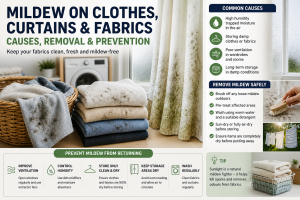
Why Mildew Forms on Clothes and Fabrics
Mildew develops in fabrics when moisture becomes trapped and airflow is limited. UK homes are particularly vulnerable due to damp weather, indoor drying habits, and seasonal storage conditions.
Common causes include:
- Storing clothes before they are fully dry
- Leaving damp towels or laundry in baskets
- Poor ventilation inside wardrobes and cupboards
- Condensation in bedrooms or storage areas
- Seasonal storage of clothes in damp environments
- Curtains absorbing moisture from windows and cold surfaces
Fabric provides an ideal environment for mildew because it holds moisture and organic material such as dust and skin particles.
How to Identify Mildew on Fabrics
Mildew on clothes and textiles is often subtle at first, but becomes more noticeable over time.
Signs include:
- Musty or damp smell coming from clothing or curtains
- White, grey, or slightly yellow patches on fabric
- Dark spots developing on stored clothes
- Damp-feeling textiles even when they appear dry
- Staining on curtains near windows or edges
In many cases, mildew is first detected by smell rather than visible marks.
Is Mildew on Clothes Dangerous?
Mildew on fabrics is not usually dangerous in small amounts, but it can still affect indoor air quality and comfort.
Potential effects include:
- Allergic reactions in sensitive individuals
- Respiratory irritation when handling affected fabrics
- Spread of spores to other textiles in storage areas
- Persistent unpleasant odours in wardrobes and rooms
While not as severe as black mould, mildew should still be treated promptly to prevent spreading.
Step-by-Step: How to Remove Mildew from Clothes
Effective mildew removal depends on how deeply it has penetrated the fabric.
Step 1: Isolate the affected items
- Separate mildewed clothing from clean laundry
- Avoid shaking fabrics, as this can spread spores
Step 2: Pre-treat the fabric
- Brush off any loose mildew outdoors if possible
- Apply a suitable stain remover or mild detergent solution
- For delicate fabrics, test a small hidden area first
Step 3: Wash at the correct temperature
- Wash according to fabric care instructions
- Use the warmest safe temperature for the material
- Add laundry disinfectant or anti-fungal washing additives if suitable
Step 4: Sun-dry when possible
- Dry clothes outdoors in sunlight if available
- Ensure items are fully dry before storage
Sunlight helps naturally reduce mildew spores and odours.
How to Remove Mildew from Curtains
Curtains are especially prone to mildew because they are exposed to window condensation and limited airflow.
For machine-washable curtains:
- Remove and wash according to label instructions
- Use a gentle detergent and appropriate temperature
- Ensure full drying before rehanging
For non-washable curtains:
- Use a fabric-safe upholstery cleaner
- Lightly treat affected areas without soaking
- Improve ventilation in the room immediately
In severe cases, curtain replacement may be necessary if mildew has deeply penetrated fibres.
How to Remove Mildew Smell from Fabrics
Even after cleaning, mildew odour can remain trapped in fibres.
To remove smell:
- Rewash fabrics with baking soda or odour-neutralising additives
- Ensure complete drying before storage
- Air clothes outdoors in fresh air for several hours
- Avoid storing items in enclosed damp spaces immediately after washing
Persistent smell often indicates that moisture or spores are still present.
When Mildew Damage Becomes Permanent
Not all fabrics can be fully restored after mildew exposure.
Damage may be permanent if:
- Mildew has deeply stained delicate fabrics
- Odour remains after multiple washes
- Fabric fibres have weakened or discoloured
- Items were stored damp for extended periods
In these cases, replacement may be the only effective solution.
How to Prevent Mildew on Clothes and Fabrics
Prevention is key, especially in UK homes where humidity levels fluctuate seasonally.
Improve storage conditions:
- Ensure wardrobes are dry and ventilated
- Avoid overcrowding clothes in enclosed spaces
- Use moisture absorbers or dehumidifiers in storage rooms
Manage laundry properly:
- Never store damp clothes or towels
- Dry laundry fully before folding or putting away
- Avoid leaving washing in machines for long periods
Reduce indoor humidity:
- Ventilate rooms regularly
- Use extractor fans in bathrooms and kitchens
- Avoid excessive indoor drying of clothes
Protect curtains and textiles:
- Keep airflow around windows where condensation forms
- Regularly clean curtains to prevent build-up
- Check for damp patches near external walls
Why Mildew in Fabrics Is Common in the UK
UK homes are particularly prone to fabric mildew due to:
- Frequent rain and high humidity levels
- Limited outdoor drying opportunities in winter
- Older housing with poor ventilation
- Condensation forming on cold windows and walls
- Heavy reliance on indoor drying of laundry
These conditions create a consistent environment for mildew growth in textiles.
When to Seek Professional Help
While most fabric mildew can be treated at home, professional help may be needed if:
- Large volumes of stored clothing are affected
- Curtains or upholstery have severe contamination
- Mildew keeps returning after cleaning
- There is a strong, persistent damp smell in storage areas
- The issue is linked to wider damp problems in the property
In such cases, the underlying moisture issue may need addressing to prevent recurrence.
Final Thoughts
Mildew on clothes, curtains, and fabrics is a common issue in UK homes, especially during colder and wetter months. While it can often be treated with careful cleaning, its return usually indicates a wider humidity or ventilation problem.
Effective treatment is not just about washing affected items, but also about controlling moisture, improving airflow, and ensuring proper storage conditions. With the right approach, mildew can be removed and prevented from returning long-term.