
Condensation Mould vs Damp: Key Differences, Causes & Correct Treatment
Many homeowners in the UK confuse condensation mould and damp because both can cause similar visible symptoms such as stains, mould growth, and musty smells. However, they are fundamentally different problems with different causes and treatment methods.
Understanding the difference is essential because incorrect diagnosis often leads to repeated mould problems and ineffective treatment.
This guide explains how to identify condensation mould versus damp, what causes each issue, and the correct approach to treatment and prevention.
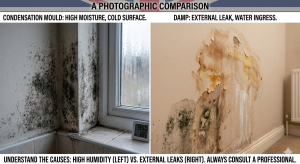
What Is Condensation Mould?
Condensation mould is the most common type of mould found in UK homes, especially in bathrooms, bedrooms, and poorly ventilated rooms.
It occurs when warm, moist air hits a cold surface and turns into water droplets, creating ideal conditions for mould growth.
Typical signs of condensation mould include:
- Black or dark spots on walls and ceilings
- Mould around windows and window frames
- Growth in corners of rooms or external walls
- Occurrence in colder months
- Recurring mould after cleaning
Condensation mould is primarily an environmental issue caused by humidity and ventilation problems.
What Is Damp?
Damp refers to excess moisture entering or being retained within a building structure. Unlike condensation, damp is often linked to physical defects or structural issues.
Common types of damp include:
- Rising damp from ground moisture
- Penetrating damp from external walls or roofs
- Plumbing leaks inside walls or floors
Signs of damp include:
- Wet or patchy walls that feel cold and damp
- Peeling paint or wallpaper
- Salt deposits or tide marks on walls
- Persistent damp smell
- Localised, spreading moisture patterns
Damp is usually a structural or maintenance issue, not just a ventilation problem.
Differences Between Condensation Mould and Damp
Although they may look similar, the causes and solutions are very different.
Condensation mould:
- Caused by indoor humidity
- Affects surface areas like walls and windows
- Common in bathrooms and bedrooms
- Linked to ventilation and airflow
- Often seasonal (worse in winter)
Damp:
- Caused by water ingress or leaks
- Affects structure of walls and floors
- Can spread gradually over time
- Often requires building repairs
- Not dependent on indoor humidity alone
Correct identification is essential before treatment begins.
Why People Confuse the Two
Condensation mould and damp are often mistaken for each other because both can appear as dark patches on walls and ceilings.
Common confusion arises because:
- Both cause visible staining or mould growth
- Both can produce musty smells
- Both are worse in older or poorly maintained properties
- Both can appear in similar locations like corners or external walls
However, treating damp as condensation mould (or vice versa) often leads to recurring problems.
How to Diagnose the Problem Correctly
Before treatment, proper diagnosis is essential.
You can look for:
- Location patterns: condensation mould appears in humid areas, damp is more localised and structural
- Surface feel: damp walls may feel wet or cold even without visible condensation
- Timing: condensation mould often appears in colder months
- Spread pattern: damp may spread horizontally or vertically over time
- Recurring nature: both can return, but damp persists regardless of ventilation
Professional moisture assessment is often required for accurate diagnosis.
Correct Treatment Approach for Condensation Mould
If the issue is condensation mould, the focus should be on controlling humidity and improving airflow.
Effective steps include:
- Improving ventilation in affected rooms
- Using extractor fans consistently
- Reducing indoor moisture production
- Keeping heating stable during colder months
- Using dehumidifiers in high-risk areas
- Cleaning affected surfaces safely
Without moisture control, condensation mould will return repeatedly.
Correct Treatment Approach for Damp
If damp is present, structural issues must be addressed first.
Typical solutions include:
- Repairing roof or plumbing leaks
- Fixing external wall defects
- Treating rising damp with damp-proofing solutions
- Improving insulation and building integrity
- Allowing professional drying of affected structures
Cleaning alone will not resolve damp-related mould.
What Happens If You Misdiagnose the Problem?
Misidentifying condensation mould as damp (or vice versa) can lead to:
- Repeated mould growth after cleaning
- Worsening structural damage
- Unnecessary treatment costs
- Ongoing indoor air quality issues
- Delayed repairs to serious building faults
This is why accurate assessment is essential before any treatment begins.
When to Call a Professional Mould Specialist
You should seek professional help if:
- Mould keeps returning despite cleaning
- You are unsure whether it is damp or condensation
- Walls feel persistently cold or wet
- There is a strong, ongoing damp smell
- Multiple rooms are affected
- Visible structural damage is present
A specialist can perform moisture testing and identify the true cause.
Final Thoughts
Condensation mould and damp may look similar, but they are fundamentally different problems requiring different solutions. Condensation mould is driven by indoor humidity and ventilation, while damp is caused by structural moisture issues.
Correct diagnosis is the key to long-term success. Without it, mould problems will continue to return regardless of how often surfaces are cleaned.
Understanding the difference allows homeowners to take the right steps, apply the correct treatment, and prevent future recurrence effectively.
Expert Tip on Moisture and Mould Control
For lasting results, always address both the visible mould and the underlying moisture source. This combined approach ensures effective removal and long-term prevention in UK homes.
Expert Tips & Practical Guides for Mould and Mildew Removal, Treatment & Prevention
- How to Stop Mildew Smell in Your Home (Even After Cleaning)
- Mildew on Clothes, Curtains & Fabrics: Causes, Removal & Cleaning Guide
- Do Dehumidifiers Really Stop Mildew? What Actually Works in UK Homes
- What Causes Mould Around Windows and How to Stop It
- Condensation Mould vs Damp: Key Differences, Causes & Correct Treatment
- Mould in Rented Flats UK – Tenant Rights and Landlord Responsibilities
- Why Does Mould Keep Coming Back on My Walls? Causes & Long-Term Fixes
- How to Get Rid of Black Mould in Your Bathroom (Step-by-Step Guide 2026)