
What Causes Mould Around Windows and How to Stop It
Mould around windows is one of the most common issues in UK homes, particularly in flats, older houses, and properties with single glazing or poor insulation. It often appears as black or dark patches on window frames, seals, and surrounding walls.
While it may seem like a cleaning issue, window mould is almost always a sign of condensation and airflow problems rather than simple dirt or neglect.
This guide explains why mould forms around windows, what causes it in UK homes, and how to stop it permanently.
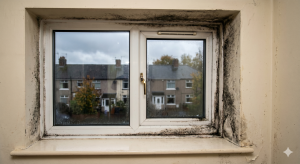
Why Mould Grows Around Windows
Windows are one of the coldest areas in a property. When warm indoor air meets a cold glass or frame, condensation forms. This creates a damp surface where mould can grow quickly.
Mould around windows is usually caused by a combination of:
- Condensation from warm indoor air
- Cold surfaces caused by poor insulation
- Limited airflow around window frames
- High indoor humidity levels
- Infrequent ventilation in bedrooms and living spaces
This is especially common during colder months when windows are closed and heating is used more frequently.
Cold Bridges – The Main Hidden Cause
Cold bridges are areas where heat escapes from the building more easily, causing certain surfaces to remain significantly colder than others.
Around windows, cold bridges typically occur due to:
- Poor insulation around window frames
- Single-glazed or outdated double glazing
- Gaps between frames and walls
- Thermal weakness in older building materials
When warm air hits these cold points, condensation forms repeatedly, creating ideal conditions for mould growth.
Even if you clean the mould, the cold bridge remains, meaning the problem returns.
Insulation Issues in UK Homes
Poor insulation is a major contributor to window mould, especially in older UK properties and converted flats.
Common insulation-related causes include:
- Thin or uninsulated external walls
- Outdated or poorly fitted windows
- Gaps in window sealing or frames
- Heat loss around structural openings
These issues create temperature differences that encourage condensation to form around windows.
Poor Airflow Around Windows
Airflow plays a critical role in preventing moisture build-up.
Mould often develops when:
- Curtains or blinds block airflow
- Furniture is placed too close to windows
- Windows are rarely opened due to weather or noise
- Rooms are poorly ventilated overall
Without airflow, moisture stays trapped on cold surfaces, allowing mould to grow and spread.
High Indoor Humidity Levels
Excess humidity significantly increases condensation on windows.
Common sources include:
- Cooking without proper extraction
- Showering without ventilation
- Drying clothes indoors
- Lack of dehumidification in winter
- Poor heating balance across rooms
The higher the humidity, the more moisture condenses on cold window surfaces.
Why Window Mould Keeps Coming Back
Even after cleaning, mould often returns because the underlying conditions remain unchanged.
It keeps coming back due to:
- Ongoing condensation on cold glass and frames
- Unresolved insulation problems
- Persistent airflow restrictions
- Hidden moisture build-up in surrounding walls
This is why surface cleaning alone is rarely a permanent solution.
How to Stop Mould Around Windows Permanently
To permanently resolve window mould, you must address both moisture and temperature imbalance.
Improve Ventilation
Better airflow reduces condensation build-up.
Effective steps include:
- Opening windows regularly, even briefly
- Using extractor fans in nearby rooms
- Allowing air circulation around window frames
- Avoiding blocking airflow with furniture or curtains
Reduce Indoor Humidity
Lower humidity means less condensation.
You can achieve this by:
- Using dehumidifiers in high-risk rooms
- Avoiding indoor drying of clothes where possible
- Covering pans while cooking
- Keeping bathrooms well ventilated after showers
Improve Insulation Around Windows
Addressing cold surfaces is key for long-term prevention.
Solutions include:
- Upgrading to double or triple glazing
- Sealing gaps around window frames
- Improving wall insulation around external walls
- Using thermal curtains where appropriate
Clean and Treat Affected Areas Properly
Once conditions are controlled, cleaning becomes effective.
Proper treatment involves:
- Safe removal of visible mould from frames and seals
- Deep cleaning of affected surfaces
- Drying the area thoroughly after treatment
- Applying preventative anti-mould solutions where needed
When to Seek Professional Help
You should consider expert assistance if:
- Mould keeps returning despite cleaning
- Multiple windows are affected
- Condensation is severe even with ventilation
- You suspect insulation or structural issues
- There is a persistent damp smell near windows
Professionals can identify whether the issue is condensation-based or linked to structural defects.
Final Thoughts
Mould around windows is not just a cleaning issue — it is a clear sign of condensation, insulation weakness, and airflow problems. Cold bridges and poor ventilation create the perfect conditions for recurring mould growth.
To stop it permanently, you must improve airflow, reduce humidity, and address insulation weaknesses. Once these underlying issues are resolved, window mould can be effectively controlled and prevented.
Expert Tip for Long-Term Window Mould Prevention
The most effective long-term solution is combining improved ventilation with insulation upgrades. Without addressing both temperature imbalance and moisture control, window mould is likely to return even after repeated cleaning.
Expert Tips & Practical Guides for Mould and Mildew Removal, Treatment & Prevention
- How to Stop Mildew Smell in Your Home (Even After Cleaning)
- Mildew on Clothes, Curtains & Fabrics: Causes, Removal & Cleaning Guide
- Do Dehumidifiers Really Stop Mildew? What Actually Works in UK Homes
- What Causes Mould Around Windows and How to Stop It
- Condensation Mould vs Damp: Key Differences, Causes & Correct Treatment
- Mould in Rented Flats UK – Tenant Rights and Landlord Responsibilities
- Why Does Mould Keep Coming Back on My Walls? Causes & Long-Term Fixes
- How to Get Rid of Black Mould in Your Bathroom (Step-by-Step Guide 2026)